
Chicopee Previous Residents by Era
Previous residents of a Chicopee address leave different kinds of evidence in different years. Start with the modern parcel and title trail when the date is recent. Then move to city directories, street listings, maps, permits, newspapers, and probate for the people and buildings behind the title record. A name on a deed is not necessarily a person who lived there. Conversely, a directory entry may identify a household member who never owned the parcel.
| Source | Chicopee coverage | Where held | What it contributes |
|---|---|---|---|
| Hampden recorded-land images | Registry FAQ: 1731 to present; About page: images from 1636 | Registry portal, counter, and microfilm | Deeds, mortgages, liens, plans, and recorded parties |
| Online name index | About page: 1948 to present; FAQ: computer index from 1966 | Hampden Registry search and public terminal | Grantor, grantee, and document placement |
| City directories | 1875-76 through 1933 online selection; later shelf gaps through 1989 | History Room and Archives Online | Address, household, occupation, and street snapshots |
| Street listings | 1939 to present | Chicopee History Room | Listed names by street and year |
| Sanborn and maps | 1915 Sanborn; local maps 1855 to 1916 | History Room and Library of Congress | Building footprint, use, and street geometry |
The table is a time map, not a promise of a complete household list. When an online search reaches its cutoff, the appropriate next stop is the Registry's older-book, microfilm, or unindexed-property procedure.
Choose the first source by the date and the question. A recent sale starts with the assessor and Registry. A family name attached to a prewar address starts with a directory, street listing, or newspaper, then moves to the parcel and title language. A building question starts with the map and permits. This prevents a useful record from being asked to answer something it does not contain.
Start a Chicopee Address with the Parcel
The most reliable packet begins with the physical parcel, not a surname. Search the Chicopee Vision assessor database by street address, owner name, or map-block-lot. Record the situs address, owner of record, owner mailing address, map-block-lot, value year, and any book or page reference. The situs is the physical property. The mailing address is where the tax bill goes and can be in another place, so it does not prove that an owner lived in Chicopee.
Next, find the same parcel in the Chicopee public GIS. Its parcel ID, record-card links, and map view connect the physical location with the title search. The assessor says FY2026 legal-owner information is as of May 1, 2025. A newer transfer can therefore appear at the Registry before it appears on the tax record.
Note: Write the parcel ID and legal description beside each address form because a street number can change while title language remains stable.
Hampden's Older Books and Index Split
The Hampden County Registry has deep records but a shorter current online name index. Its FAQ says records reach 1731 and identifies older books on microfilm and through unindexed search. The Registry About page describes recorded-land indexing from 1948, images from 1636, and plan indices from 1902. The FAQ's 1966 computer-index statement and the About page's 1948 index statement should be treated as different descriptions of searchable coverage, not merged into a made-up cutoff.
This numeric coverage split changes how previous residents research proceeds. A missing name in the current web form can mean the search reached an index boundary. It does not prove that the property had no older deed. Ask the Registry counter how to search the relevant book, microfilm, plan, or unindexed property material, then carry forward the legal description and abutter references found in the deed.
Registry staff and public terminals are part of the documented access chain, not merely a last resort. The Registry says new records are abstracted, scanned, checked, and available online within minutes, while older retired books require a different path. Record the exact book, page, plan, and legal-description wording before changing search methods. That notation lets a later directory or map result be tested against the same land.
Trace Chicopee Previous Residents Through Deeds
The Hampden Registry search supports the title portion of a backward address trail. Match the current owner or book and page to a purchase deed, then read the deed image. The grantor is the party conveying an interest. The grantee is the party receiving it. Often, the grantor on a later deed is the earlier owner, but estates, trusts, corporations, foreclosures, and inheritance can interrupt a simple surname sequence.
- Capture the current owner, parcel ID, and any deed reference from the assessor or GIS record.
- Search the current owner as grantee in the Registry and open the likely purchase deed.
- Record its grantor, recording date, book and page or document number, legal description, and plan reference.
- Search that seller as a grantee to locate the earlier acquisition, then repeat the chain.
- When the online index cannot reach the needed era, use the Registry's counter, microfilm, and unindexed search route.
The Registry screenshot follows the recorded-land search source used in this step.
The search interface is a title tool. It helps date and connect recorded parties, while a household source is still needed to identify who lived at the address during the same period.
- Grantor and grantee
- The grantor transfers an interest; the grantee receives it in the recorded instrument.
- Chain of title
- A sequence of recorded transfers that connects a parcel's present title to earlier title events.
- Legal description
- The deed's lot, plan, bounds, or similar parcel wording. It can outlast an old street number.
Chicopee Buildings Before the 1915 Map
The 1915 Chicopee and Chicopee Falls Sanborn sequence has 40 sheets. It can show whether a building stood at the location, its footprint, material, use, and the street pattern at that time. It cannot name an occupant. Pair it with an address from a directory or street listing, then use the parcel and deed trail to decide whether the historic location matches today's address.
Permits add a later building-history layer. Chicopee's online permits route makes issued permits available without a login, while older coverage is not published. For a period the online system does not reach, request an archived record from the Building Department or the responsible records-access officer. A permit can date construction, alteration, or occupancy evidence, but it is not a complete list of past residents.
Maps can also help when a directory seems to omit an address. A house may have been part of a larger parcel, identified by a village name, or numbered differently from the present street. Compare street junctions, building footprints, plan references, and abutting parcels before deciding that a gap means the address did not exist. This is a location check, not a reason to infer an unnamed household.
Past Chicopee Households in Directories
Previous residents are found at the household level by pairing dates, not by assuming a deed party occupied the property. Chicopee Archives Online has digitized directory material from 1875-76 through 1933, and the History Room lists later print holdings with gaps. Street listings from voter lists begin in 1939. The detailed directory collections remain available through the Chicopee city directory, while this address trail uses the relevant year to test a specific property.
Read the exact spelling, initial, occupation, household notation, village label, and street number as printed. Move one available directory year backward and forward. A gap does not establish a move. Use the nearest volume and mark the missing interval. Federal census schedules are released after 72 years, with 1950 public at the research date, so a directory can be paired with the available census snapshot rather than treated as a complete census substitute.
Address to household flow: parcel and legal description → dated directory or street listing → matching public census year → obituary or probate endpoint when a death is documented.
Chicopee Previous Residents at Life's End
An obituary, death record, and probate file can close a past-resident trail. Obituaries and library newspaper databases may supply relatives, organizations, or a final address. Probate can identify an executor, administrator, heirs, and an estate transfer that explains an otherwise abrupt deed change. The Hampden Probate and Family Court is the appropriate custodian for probate matters in the county. A cemetery listing supplies burial context, not a current address or a next-of-kin directory.
The Chicopee genealogy service is a local vital-record route and explains an important address limit: old records may say only “City of Chicopee,” without a street number. Use that city-level fact with directories, maps, newspapers, and deeds to rebuild the street layer.
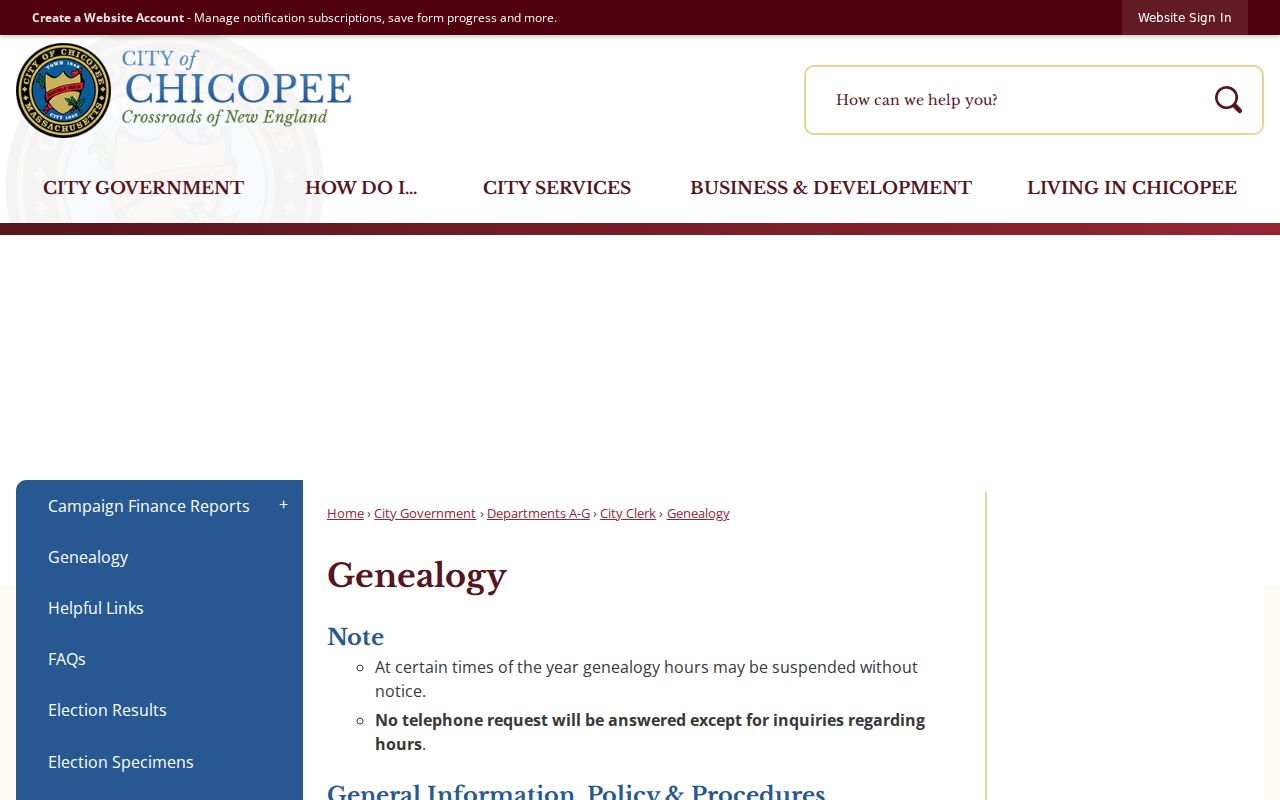
The local genealogy information supports a careful division of work. Vital material can identify a person or event, while property and directory sources connect that person to a particular address.
Lawful use. Chicopee house-history and family-history research should stay focused on documented records. Do not use a past address or a living person's information to follow, harass, or harm anyone.
Chicopee Previous Residents and Village Labels
“Chicopee” is not always the only place name to search. The city separated from Springfield in 1848, and historical records can use North Springfield, Cabotville, Chicopee Center, Chicopee Falls, Willimansett, Aldenville, or Fairview. The City Clerk's warning about old records with only a city name makes those labels especially useful when a street number is missing.
Preserve the original location wording in notes. Compare it with History Room maps from 1855 to 1916, the directory street index, and the current parcel ID. That approach prevents a village label from being mistaken for a separate municipality and keeps a past Chicopee household connected to the correct address trail.
Before 1848, a family event may appear under Springfield, town, or church records rather than a Chicopee heading. After the city's separation, a record can still use an older village form. Searching both the printed place name and the later Chicopee form gives a better bridge between a vital or newspaper lead and a documented street address.